Behind-the-Meter Power for Data Centers: Why Battery Storage Holds the Key

HIGHLIGHTS
|
Behind-the-Meter Power Is Changing Industry Strategy. But Are Data Centers Focused on the Correct Areas?
Data center power demand continues to rise; the International Energy Agency (IEA) estimates data centers already account for around 1% of global electricity demand, with that figure expected to rise alongside digital and AI-driven workloads1. Many in the industry are now focused on behind-the-meter (BTM) power as part of the solution to a growing power conundrum.
Power constraints are slowing projects, reshaping site selection, and forcing operators to rethink how and where they secure energy. In key U.S. markets, access to power is now emerging as a defining factor in data center development strategy2. One report from Bloom Energy even suggests that power access is the leading factor in data center site selection3.
Power generation can be a key part of any BTM strategy for data centers. However, power supply and demand don’t always align—especially when it comes to intermittent sources, such as wind and solar. To bridge this supply-demand gap, data centers need energy flexibility; that’s where battery storage can come into play.
How a Holistic BTM Power Strategy Can Help Meet Data Center Power Demand.
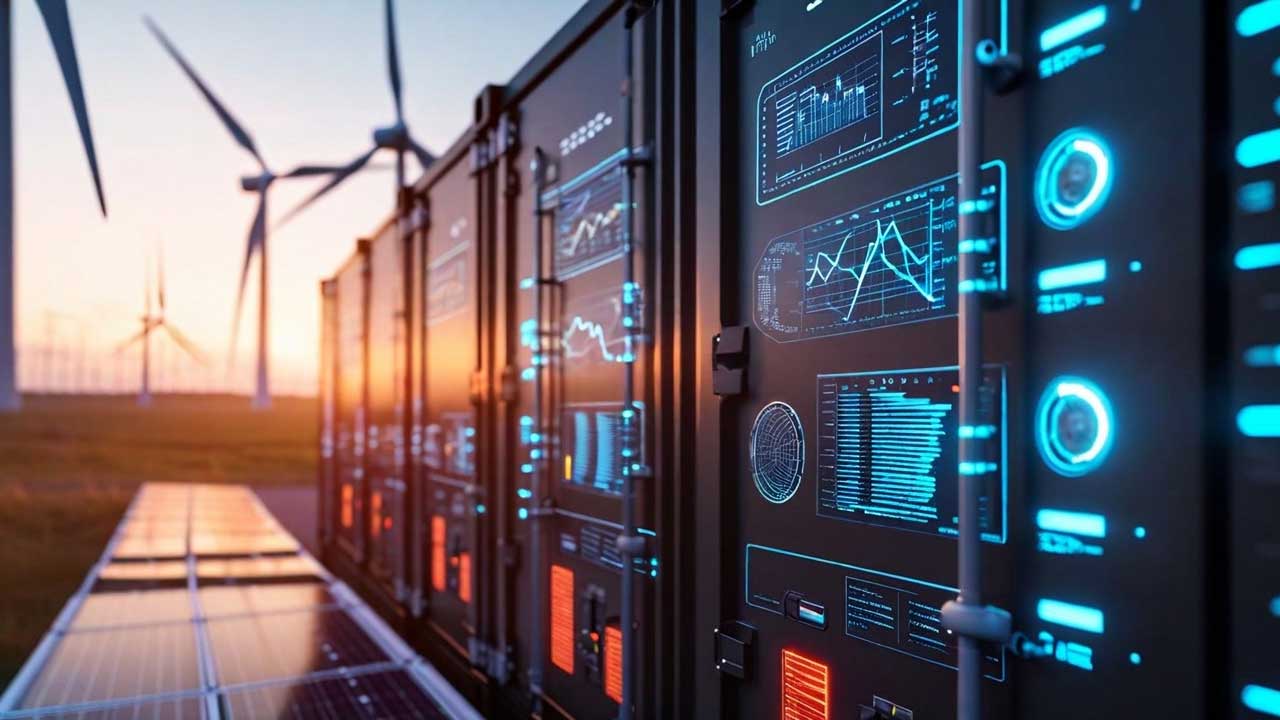
To understand the role of battery storage in BTM power, consider the hypothetical example of a data center operator which has invested heavily in onsite power generation infrastructure: solar panels, wind turbines, etc.
Supply from the previously mentioned energy sources is intermittent and doesn’t always align with the data center’s power demands. To put it simply, the sun doesn’t always shine, and the wind doesn’t always blow exactly when the data center needs power.
For an effective BTM strategy, the data center needs battery storage to enable flexible use of power generated onsite. When power supply peaks, energy is stored. When demand peaks, the data center can draw upon that same supply of stored energy.
UPS Batteries: The Industry’s Hidden BTM Asset?
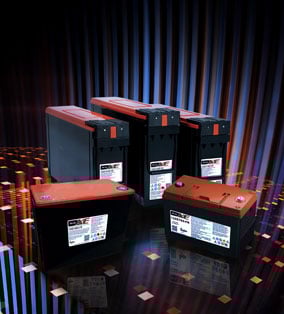
Most data centers already have significant energy storage installed in the form of UPS batteries. But those systems are still largely treated as passive infrastructure—there for outages, ignored the rest of the time.
In a constrained and volatile energy environment, storage determines:
- How efficiently energy is used.
- How quickly systems recover.
- How resilient operations actually are under stress.
Even if data centers are not generating power onsite, UPS batteries can still help enable an effective BTM strategy which is integrated with intermittent grid power. Energy from solar and wind can be stored in UPS batteries during peak periods of grid supply; that same energy can later be deployed by data centers to help meet periods of peak power demand.
BloombergNEF’s Energy Storage Market Outlook consistently positions energy storage as a critical enabler of grid flexibility and renewable integration, particularly as variable renewable generation increases4.
Utilizing these ‘hidden assets’ in a BTM power strategy requires data centers to view UPS batteries as strategic, rather than technical components.
IF YOUR BATTERY STRATEGY HASN’T BEEN REVISITED IN THE LAST FIVE YEARS, IT’S PROBABLY ALREADY MISALIGNED WITH HOW MODERN DATA CENTERS OPERATE.
|
Progressing Towards a Commercially Viable UPS Battery Strategy.
BTM power is not the only area in which data centers are failing to actively consider the strategic advantages UPS batteries can bring. Many in the industry still select UPS batteries based on lowest upfront cost, and reliability, among other factors.
But batteries are no longer there just to mitigate downtime. They shape energy efficiency, cooling demand, recovery speed after outages, replacement cycles, and, ultimately, total cost of ownership.
Modern high-performance battery designs, particularly those built for high-rate discharge and rapid recharge, exist for a reason. They reduce energy waste, improve responsiveness, and extend operational life.
Failure to view UPS batteries through a strategic lens can result in higher costs and more operational headaches in the longer term.
A Battery-focused BTM Power Strategy Can Also Facilitate Sustainability.
Data centers are energy-intensive by design; that’s not going to change. What can change is how efficiently power is conditioned, stored, and dispatched to support critical loads. A BTM power strategy—with battery storage as a central tenet—can help meet rising power demand in a way that better aligns with sustainability objectives, because it adds flexibility to how energy is managed on site.
Global analysis from the IEA and McKinsey highlights efficiency, electrification, and system optimization as practical levers for reducing emissions in energy-intensive sectors5. In a data center, UPS batteries can contribute directly to those levers by enabling tighter control of energy flows (e.g., smoothing variability, reducing peaks, and optimizing when power is drawn from the grid or onsite generation).
Beyond energy flexibility, an effective UPS battery strategy can contribute positively to sustainability in other ways:
- Higher efficiency reduces losses in power conditioning and avoids wasted energy.
- Longer service life reduces material turnover and the embodied impact of replacements.
- Established recycling pathways reduce end-of-life impacts and support circularity goals.
Lead-acid battery technologies, for example, benefit from mature, large-scale recycling infrastructure—an advantage when sustainability requirements include lifecycle and end-of-life outcomes, not only operational emissions.
BATTERY STRATEGY ISN’T JUST TECHNICAL. IT’S FINANCIAL. EXPLORE HOW LONG-TERM BATTERY INVESTMENT DECISIONS CAN STRENGTHEN DATA CENTER COST PERFORMANCE AND RESILIENCE.
|
The Real Strategic Gap: Fragmented Thinking
Behind-the-meter power is exposing a deeper issue.
Most data center energy strategies are still fragmented:
- Generation decisions made in isolation.
- UPS systems specified separately.
- Sustainability targets layered on afterwards.
That approach worked when energy was abundant and predictable. It doesn’t anymore.
The Uptime Institute6 and Data Center Dynamics7 both point to power constraints and energy strategy as becoming a limiting factor in growth and a defining challenge for the sector going forward.
And yet, many operators are still optimizing parts of the system instead of taking a holistic approach.
Final Thought: The Industry Is Fixated on the Wrong Hero
Without battery storage, it’s difficult to see how data centers can deploy effective BTM power strategies to help meet burgeoning power demand. We could say that the industry doesn’t have a power access problem but instead has a power strategy problem—a strategy which fails to account for the pivotal role of battery storage.
About The Author
Michael Sagar is Director of Marketing for Energy Systems at EnerSys®. With over 10 years of experience in energy storage solutions, Michael helps utilities and industrial operators modernize their infrastructure for greater reliability, efficiency, and sustainability.
About EnerSys
EnerSys is the industrial technology leader serving the global community with mission critical stored energy solutions. For the global data center market, EnerSys has a long history of offering tailored solutions to help maintain uptime and avoid downtime. As the industry continues to undergo rapid growth, our experts remain committed to working with key industry partners to support energy efficiency, reliability, and circularity.
REFERENCES
1. International Energy Agency (IEA), Data Centres and Data Transmission Networks Tracking Report, https://www.iea.org/reports/data-centres-and-data-transmission-networks
2. DC Byte, Why Behind-the-Meter Power Is Becoming Key to U.S. Data Center Strategy, https://www.dcbyte.com/news-blogs/why-behind-the-meter-power-is-becoming-key-to-u-s-data-center-strategy/
3. Bloom Energy, Onsite Generation Expected to Fully Power 27% of Data Center Facilities by 2030, https://www.bloomenergy.com/news/onsite-generation-expected-to-fully-power-27-percent-of-data-center-facilities-by-2030/
4. BloombergNEF, Energy Storage Market Outlook, https://about.bnef.com/
5. McKinsey & Company, The Net-Zero Transition: What It Would Cost, What It Could Bring, https://www.mckinsey.com/capabilities/sustainability/our-insights/the-net-zero-transition-what-it-would-cost-what-it-could-bring
6. Uptime Institute, Global Data Center Survey, https://uptimeinstitute.com/research-and-reports
7. Data Center Dynamics (DCD), coverage on power constraints and infrastructure challenges, https://www.datacenterdynamics.com/
Caution Concerning Forward-Looking Statements
EnerSys is making this statement in order to satisfy the “Safe Harbor” provision contained in the Private Securities Litigation Reform Act of 1995. Any of the statements contained in this article that are not statements of historical fact may include forward-looking statements that involve a number of risks and uncertainties. A forward-looking statement predicts, projects, or uses future events as expectations or possibilities. Forward-looking statements may be based on expectations concerning future events and are subject to risks and uncertainties relating to operations and the economic environment, all of which are difficult to predict and many of which are beyond our control. For a discussion of such risks and uncertainties that could cause actual results to differ materially from those matters expressed in or implied by forward-looking statements, please see our risk factors as disclosed in the “Risk Factors” section of our annual report on Form 10-K for the most recently ended fiscal year. The statements in this article are made as of the date of this article, even if subsequently made available by EnerSys on its website or otherwise. EnerSys does not undertake any obligation to update or revise these statements to reflect events or circumstances occurring after the date of the article.
Latest Blog Posts
08.07.26
Your Runtime Target May Be Right. Your UPS Energy Storage Strategy May Not Be.

07.04.26
Data Center UPS Batteries: Strengthening Financial Strategy With a Long-term Capital Investment

18.02.26
Why Modern Data Centers Need a New Approach to UPS Batteries
16.02.26
Data Center Project Delays: Why Power Availability Probably Isn’t Your Only Problem

22.01.26
Data Centers in 2026: 5 Trends Reshaping Power, Cost, and Resilience
12.12.25
Data Center Outages Are Declining, But Here’s Why You Still Need to Prepare
20.11.25
Data centers to power 520% rise in AI traffic this US holiday shopping season

15.10.25
Maximizing Data Center Whitespace Amid Soaring Prices
|
THINK ALL ‘PURE LEAD’ BATTERIES ARE THE SAME? THINK AGAINIn a word: no. ‘Pure lead’ batteries vary in terms of performance, TCO, lifespan, and other factors. Your choice of batteries can have a detrimental effect on your data center’s operational efficiency and expenditure. FIND OUT WHY YOUR DATA CENTER MIGHT BE LOSING OUT
|