EVALUATE YOUR UPS BATTERY PERFORMANCE PROFILE

Operational inefficiencies in UPS battery systems often relate to recharge performance, float-mode energy draw, thermal operating envelope, footprint utilization, or replacement cycles.

Your free no-obligation battery consultation covers:

◼ Structured analytical review by an EnerSys data center specialist.
◼ Runtime validation and recharge readiness assessment.
◼ Review of thermal operating assumptions and battery room constraints.
◼ Lifecycle and end-of-life documentation considerations.
◼ Optional commercial proposal provided following technical review.

CLICK HERE TO BOOK NOW

99.99% uptime is expected.

AI workloads introduce rapid power variability. Renewable penetration increases grid sensitivity. Cooling costs remain material. Sustainability metrics influence procurement decisions.

Data center UPS battery architecture now influences operational efficiency, infrastructure utilization and lifecycle planning. If your UPS energy storage strategy is still based primarily on nominal runtime assumptions, it may not reflect current operating conditions.

Passive standby battery architecture no longer reflects how modern data centers operate. Your future demands new thinking. EnerSys supports a performance-first approach to data center UPS energy storage strategy.


Performance-first (definition): A performance-first UPS energy storage strategy evaluates high-rate discharge alignment, recharge recovery time, operating temperature range, float-mode energy draw, and end-of-life documentation. Runtime is a specification. Performance is an operating condition.


The Pressure Is Changing

  • AI/ML workloads demand burst power capability.
  • Sub-5-minute discharge profiles are increasingly replacing traditional 15-minute autonomy assumptions.
  • Higher ambient temperatures are reducing cooling margins.
  • Renewable penetration increases the need for grid frequency stability in modern power systems.
  • Sustainability and end-of-life documentation influence procurement decisions.

If uptime is the only KPI evaluated, recharge readiness, thermal margin and lifecycle planning may be overlooked.

DataSafe-Noir-Teaser-pt1-5.jpg

DataSafe-Noir-Teaser-pt2-5.jpg

UNDERSTAND THE OPERATIONAL IMPACT OF YOUR CURRENT UPS BATTERY ARCHITECTURE

INEFFICIENT FLOAT CHARGING, WASTED WHITESPACE, PREMATURE REPLACEMENT, AND MAINTENANCE CAN INCREASE OPERATING COST DRIVERS. UPS BATTERY PERFORMANCE VARIABLES CAN INFLUENCE COOLING DEMAND, RECHARGE RECOVERY TIME, FOOTPRINT UTILIZATION AND REPLACEMENT CYCLES.
ASSESS HOW YOUR UPS BATTERY SETUP IMPACTS READINESS, COOLING, SPACE, AND LIFECYCLE PERFORMANCE.
LET’S CONNECT—IT'S EASY TO GET STARTED.

1. FILL OUT THE FORM IN LESS THAN A MINUTE.
2. HEAR BACK FROM AN ENERSYS DATA CENTER SPECIALIST.
3. GET A FREE, NO-OBLIGATION TECHNICAL REVIEW.
4. RECEIVE ANALYSIS AND, WHERE APPROPRIATE, A COMMERCIAL PROPOSAL ALIGNED WITH YOUR SITE REQUIREMENTS.

CLICK HERE TO BOOK NOW

datacenter-datasafexe-2.jpg

DATASAFE XE® BATTERIES

FOR HIGH-PERFORMANCE FACILITIES
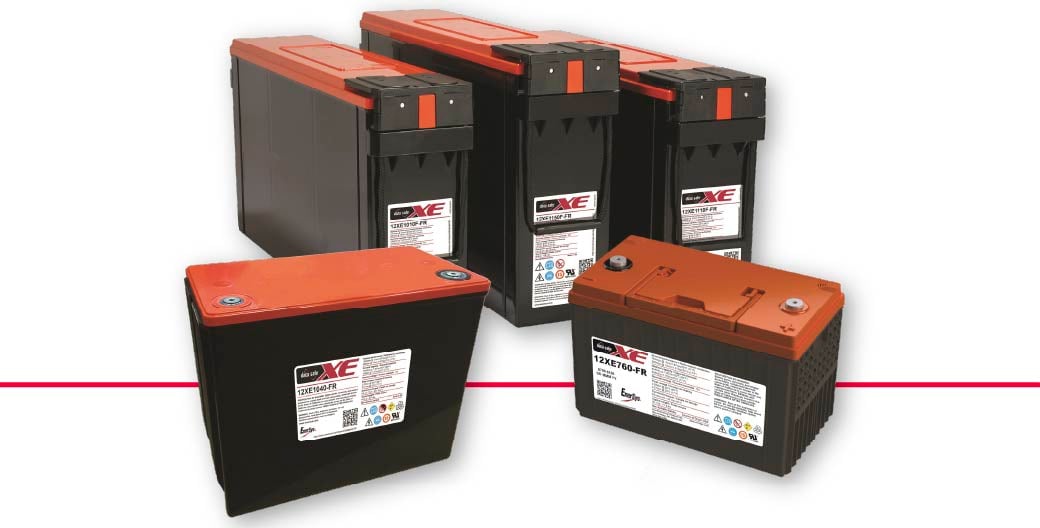
Built on EnerSys® Thin Plate Pure Lead (TPPL) technology, DataSafe® XE batteries are specifically engineered for five-minute or less high-rate discharge applications in data centers where high-performance, recharge readiness, and operational efficiency are priorities.
TPPL technology for high-density colocation, AI workloads, and large-scale UPS.

DataSafe® XE battery


datacenter-noir-3.jpg

DATASAFE NOIR ENERGY STORAGE SYSTEM

FOR WORKLOAD-DRIVEN UPS ENERGY STORAGE
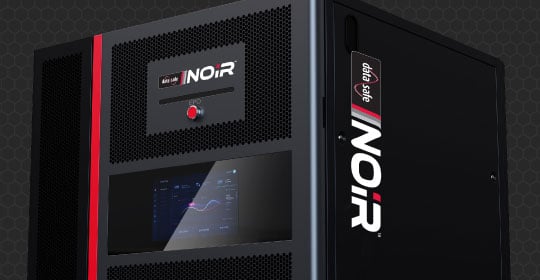
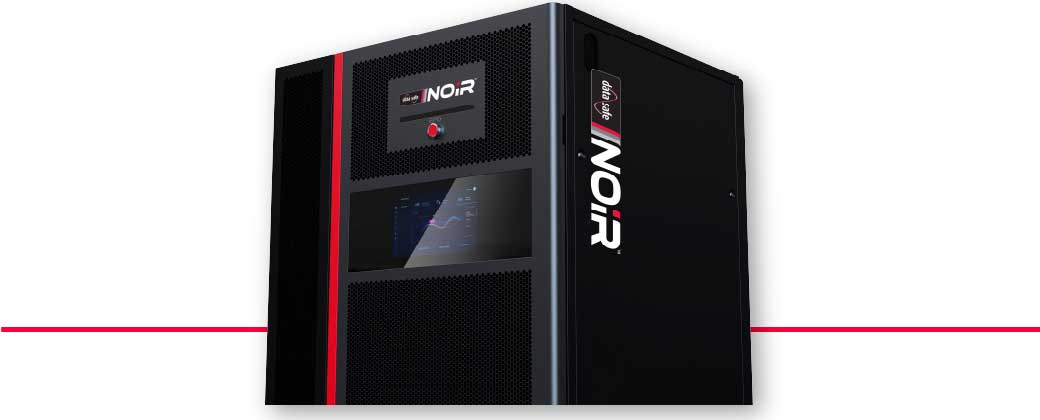
DataSafe Noir™ energy storage system is a system-level lithium platform designed for high-density data centers where short-duration, high-power duty profiles, dynamic load behavior, and space constraints are reshaping UPS energy storage requirements.
Workload-aware, lithium-based energy storage for short-duration, high-power UPS environments.

DataSafe NOIR™ ENERGY STORAGE SYSTEM

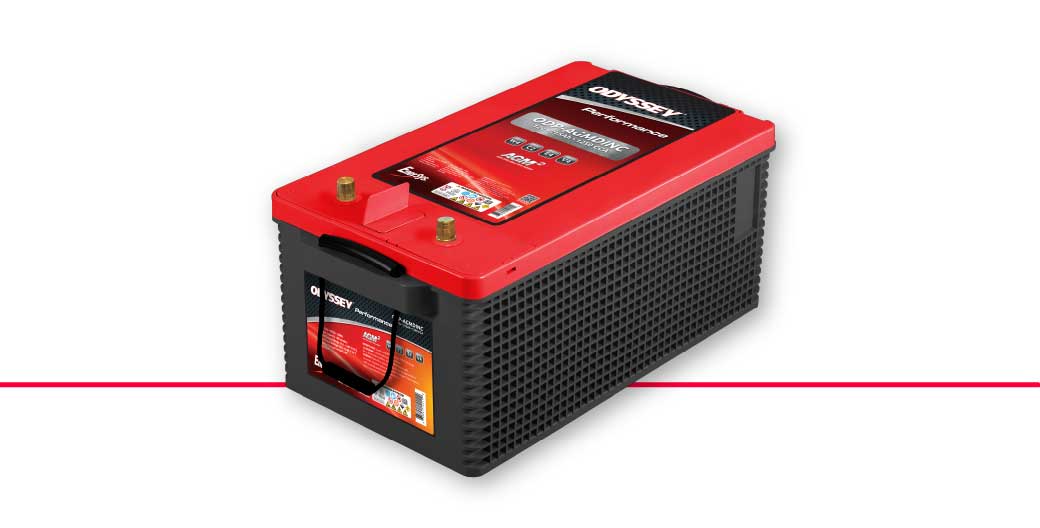
datacenter-odyssey-3.jpg

ODYSSEY® BATTERIES

RELIABLE POWER FOR GENERATOR START APPLICATIONS
When a grid event occurs, generator systems are only as reliable as the batteries that start them. ODYSSEY® batteries support generator starting and standby engine applications, where starting reliability and dependable performance are non-negotiable.
TPPL technology for generator-start applications in data center environments.

ODYSSEY® Battery


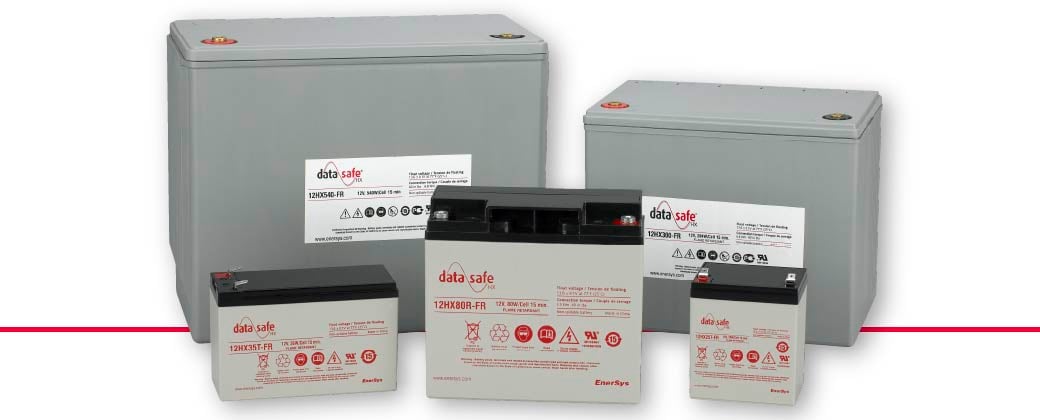
datacenter-datasafehx-2.jpg

DATASAFE® HX BATTERIES

PROVEN AGM FOR NORTH AMERICAN LEGACY UPGRADES
For operators with standard UPS configurations or cost-sensitive environments, DataSafe® HX batteries use proven VRLA AGM technology with reliable discharge for UPS and IT workloads.
Suitable for legacy UPS, and sites not yet transitioning to TPPL technology.
DataSafe® HX battery


Essential FAQs on Data Center UPS Energy Storage

It’s an approach that evaluates energy storage against real operating conditions—high-rate discharge alignment, recharge recovery time, temperature range, float-mode energy draw, and end-of-life documentation. It focuses on how batteries perform under actual operating conditions, not just on nominal runtime.

It refers to UPS duty profiles where batteries are expected to deliver high-rate power over short autonomy windows; some products are specifically developed for five-minute or less discharge applications.

In environments with multiple events close together, fast recharge improves readiness for subsequent outages.

Data center battery reserves may support grid balancing approaches under appropriate controls, but backup integrity must remain the primary function. Any grid-balancing use case should be evaluated so that backup power integrity remains the primary function.

Operators typically evaluate several variables when specifying UPS batteries, including:

  • High-rate discharge capability.
  • Recharge recovery time after an outage.
  • Operating temperature range.
  • Energy consumption during float operation.
  • Physical footprint and rack compatibility.
  • Lifecycle planning and end-of-life recycling documentation.

These factors help determine whether a battery solution aligns with the operational conditions of a modern data center.

Temperature affects battery lifespan, recharge behavior and overall system reliability. Some battery designs are engineered to operate across wider temperature ranges, which may allow operators greater flexibility in thermal management strategies.

Evaluating the operating temperature envelope of a UPS battery is an important part of system design and cooling optimization.

Recharge performance determines how quickly a battery returns to full state of charge after an outage. In environments where disturbances may occur close together, faster recharge capability can improve system readiness for subsequent events.

Recharge characteristics should be evaluated alongside discharge performance when specifying UPS batteries.

Energy density determines how much power capacity can be installed within a given footprint. Higher energy density may reduce the number of battery units required to meet system capacity, which can improve space utilization in battery rooms or equipment areas.

In high-density data center environments, physical footprint is often an important design consideration.